

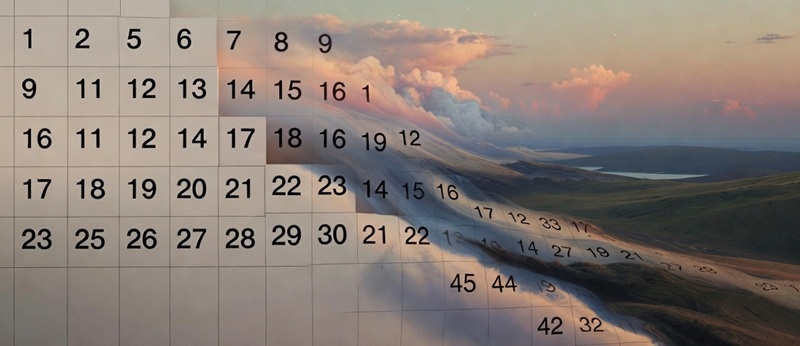
I stare at this grid of 365 tiny squares, and it hits me: this is it. This is the boundary of my year. Each cell is a container, and I’m the one deciding if it stays empty or gets filled with something that matters
Over the last few years, I have developed a quiet habit. I plot my time in a spreadsheet where I can see every single day of the year at one glance. At the end of each year, I write a personal review. Before the calendar turns, I pause and ask myself, slowly and honestly: Where am I heading? More importantly, what do I really want from this journey?
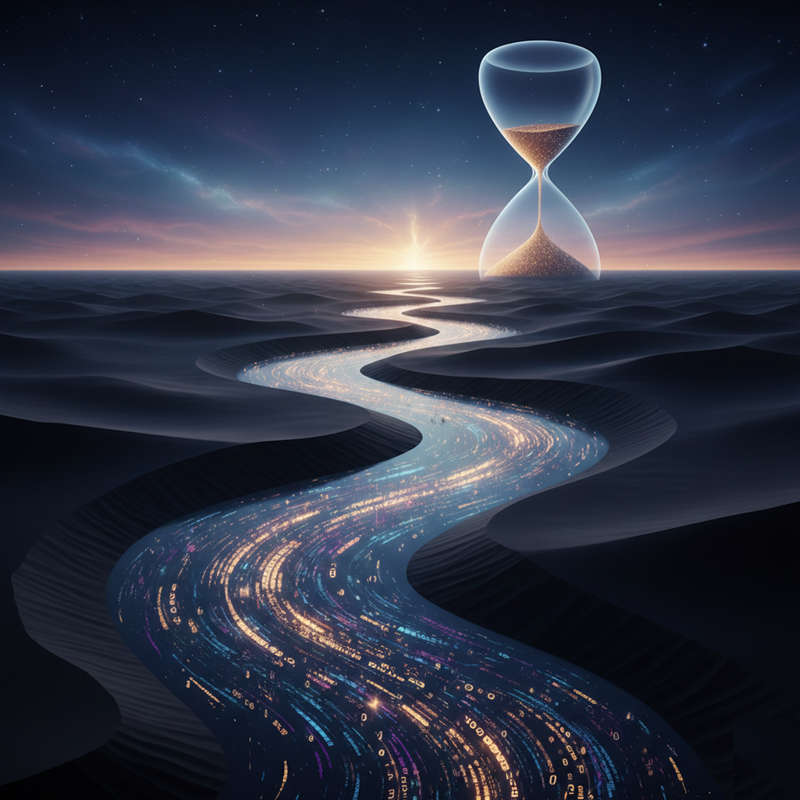
Thinking about time gives me goosebumps, like that sudden chill you feel when the sun dips below the horizon. It’s the realization that while the world moves in circles — seasons, sunrises, birthdays, our own experience is a straight line, stretching toward a horizon we can’t yet see.
It is not just the passing of days that fascinates me, but how strangely and beautifully the mind experiences it. After listening to discussions and reading deeply on this topic, I realized something surprising.
The most advanced timekeeping system in the known universe is not a clock, a pendulum, or a machine. It is the soft, humming landscape of our own minds, a private theater where the past and future are constantly performing. The human brain is not just aware of time; it travels through it.
Seed of Future Thinking
One of the deepest shifts in human evolution was our ability to look ahead. Unlike a squirrel hiding nuts through instinct, humans began to imagine futures that did not yet exist. This ability is known as mental time travel.
Consider the birth of agriculture. Planting a seed means giving up food today for something that may appear months later. To early humans, this required a bold mental leap. They had to trust a future version of the world they could not see.
This gift came with a heavy cost. Once humans learned to look far enough ahead, they reached a terrifying realization: I will not live forever. This awareness of death is not just biological; it is deeply psychological.
Some thinkers suggest that religion emerged as a response to this burden. It provided a way to soften the fear created by our own ability to imagine the end of our story.
Animals and the Silence of Tomorrow
This idea sits more in philosophy than biology. Animals are often described as immortal, not because they live forever, but because they lack the mental tools to imagine their own death.
They live entirely inside the present moment. They act through instinct, not extended foresight. A squirrel may store food, but it does not picture winter. It does not worry about the future or fear its ending.
Humans, on the other hand, connect time across days, months, and years. That connection brings intelligence, planning, and progress. It also brings anxiety. Understanding time deeply is both our greatest strength and our heaviest weight.
Mechanics of the Inner Clock
When we look at a clock, we see repetition: ticks, vibrations, and cycles. The brain works very differently. It does not rely on a single ticking mechanism. Instead, it functions more like an hourglass. Time in the brain is encoded through patterns of activity. Neurons fire in sequences, one leading to the next.
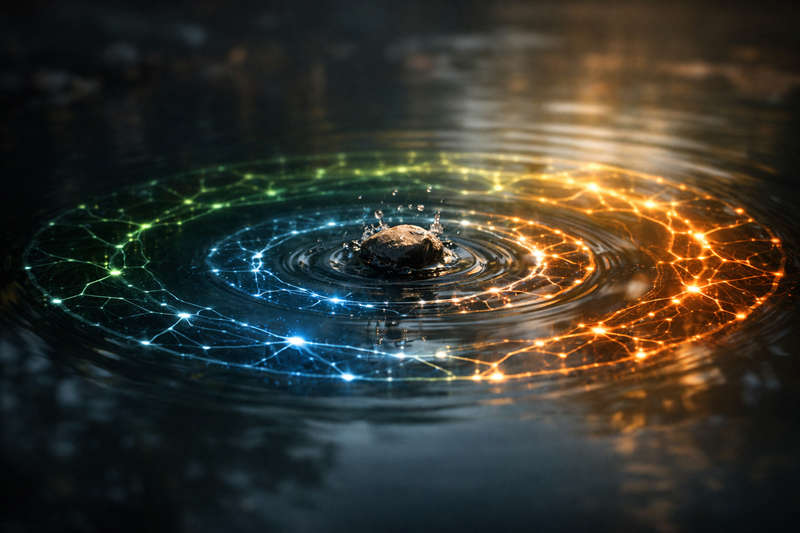
Imagine ripples spreading across water after a stone is dropped. By observing the pattern, you can tell how much time has passed. The brain reads time the same way.
Scientists have even learned to bend this inner clock. By warming or cooling specific brain regions, they can speed up or slow down an animal’s sense of time. The behavior stays the same, but the internal experience changes completely.
How the Present is Assembled
Is the present moment truly real, or is it carefully edited? Physics debates this endlessly. Some believe only the present exists while others argue that past and future are just as real. The brain solves this debate in its own way. Light reaches us slower than sound. Our eyes process information slower than our ears. Yet the world feels perfectly synchronized.
This is because the brain quietly delays perception. It gathers information inside a short window and then releases it as a single moment. What we experience as “now” is a reconstruction. It is a beautifully stitched illusion that helps us survive.
We Cannot Download Ourselves
Science fiction loves the idea of instant knowledge, but reality is less dramatic. The brain is not a computer with separate memory and processing units. Memory is the activity.
Learning means physically reshaping connections between neurons. To upload a skill would require rebuilding vast networks inside the brain. Data alone is not enough. Our biology remains bound to sight, sound, practice, and time. Growth cannot be rushed. It must be lived.
Our Greatest Tool
Perhaps the most humbling question is whether the brain is capable of fully understanding itself. Neuroscience studies a system that is also doing the studying. Our intuition has limits. We struggle to imagine deep time, quantum behavior, or infinite space.
To compensate, we invented something extraordinary: Mathematics. Math allows us to step beyond instinct. It lets us model realities our senses were never designed to grasp. Through numbers and symbols, a survival organ learned to understand stars, black holes, and time itself.
A Conscious Journey
We may never escape time. We may never upload ourselves or outrun mortality. But through reflection, imagination, and understanding, we can learn to live wisely inside it.
Every pause matters. Every moment noticed becomes meaningful. The greatest power of the human mind is not controlling time, but choosing how consciously we walk through it.
0 Comments