


How a Cinematic Mirror Reflects the Hidden Reality of Unhealthy Bonds
Relationships should be the most beautiful parts of our lives. They are supposed to be spaces where love and trust flourish. However, some relationships turn toxic, leaving deep scars.
The danger lies in their subtlety. Like weeds in a garden, toxicity grows slowly. You might not notice it until you feel entangled and unable to breathe freely. For students in schools and colleges who are just starting to explore love, this realization often comes too late.
The Illusion of a Smooth Exit
I used to believe that leaving a toxic situation was simply a matter of willpower. As a sensitive person, I’ve had moments where I stepped away from unhealthy dynamics by gradually reducing my emotional involvement. I thought I could “fix” things through a tactical withdrawal.
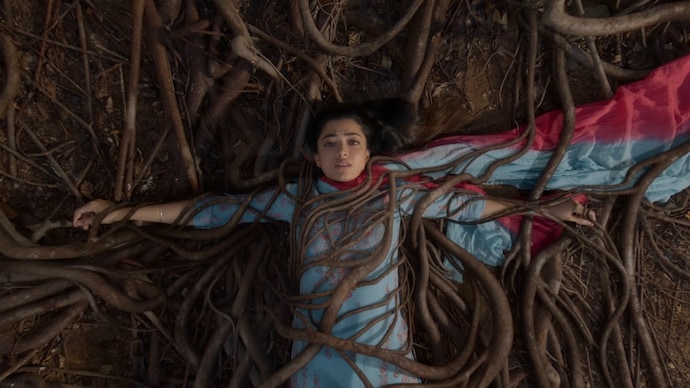
However, watching the 2025 film The Girlfriend, directed by Rahul Ravindran, changed my perspective. The film features a haunting performance by Rashmika Mandanna as Bhooma.
It forced me to realize that for many people, especially those conditioned to be submissive, toxicity is not a hurdle you just jump over. It is quicksand. You do not even know you are standing in it until you are waist deep.
Love Masked as Control
The film strips away the glamour of the “possessive lover” trope often seen in movies. It examines the rot beneath a story involving an entitled, controlling man and a timid girl. Toxicity does not always arrive with a shout. It often arrives disguised as concern or intense love.
By the time a person processes the reality, they are already in deep water. This behavior is rarely an isolated flaw. It is often an inheritance. The film suggests that toxicity is frequently a byproduct of upbringing — a cycle of entitlement passed down like a family heirloom.
The Slow Conditioning of the Mind
The brilliance of this narrative is its terrifying realism. Toxicity is not a monster in the shadows. Instead, it is the slow conditioning of gaslighting and the erosion of self worth through backhanded compliments. It is isolation masked as protectiveness.
When controlling behavior is normalized at home, a young person may grow up believing that relationships are supposed to function this way. If a girl is raised where her voice is secondary, she might not see a controlling partner as a red flag. She might see that behavior as familiar. This lack of a safety net makes leaving feel unimaginable rather than just difficult.
Toxicity is a Human Issue
We must understand that toxicity is not about gender. It is not strictly male or female; it is human toxicity. It is shaped by insecurity and unresolved emotional wounds. Many people who manipulate others do not even recognize their own behavior. They truly believe they are expressing care while they are actually suffocating the other person’s independence.
As a society, we need to look at our roles as parents and partners through a sharper lens. We focus on physical safety but often neglect emotional sovereignty. We must teach the younger generation that intensity is never a substitute for respect.
For those entering the dating pool, remember that your partner’s inability to handle your independence is not a sign of love. It is a sign of their inadequacy.
The Do’s: Prioritize your friendships and hobbies outside the relationship. If a partner asks you to drop them, they are isolating you. Always maintain your own emotional space that belongs to you alone.
The Don’ts: Do not mistake jealousy for passion. Do not ignore how a partner treats their parents or subordinates. That is the blueprint for how they will eventually treat you.
The Girlfriend is more than a cautionary tale. it is a mirror. It asks us if we are teaching our children to seek validation internally or externally. Are we building their confidence or their compliance?
Walking away from toxicity is not a sign of weakness; it is an act of courage. Genuine affection should strengthen your self worth. If a relationship slowly erodes who you are, stepping back is a sign of emotional maturity.
The path out of the muddy water begins with the realization that the water was never supposed to be muddy in the first place.
0 Comments